
The ACEA (European Automobile Manufacturers Association) has released a new study on new car sales in Europe for the first quarter of 2026. The data shows a significant increase in the share of electric and hybrid vehicles.
Hybrids and Battery Electric Vehicles Dominate
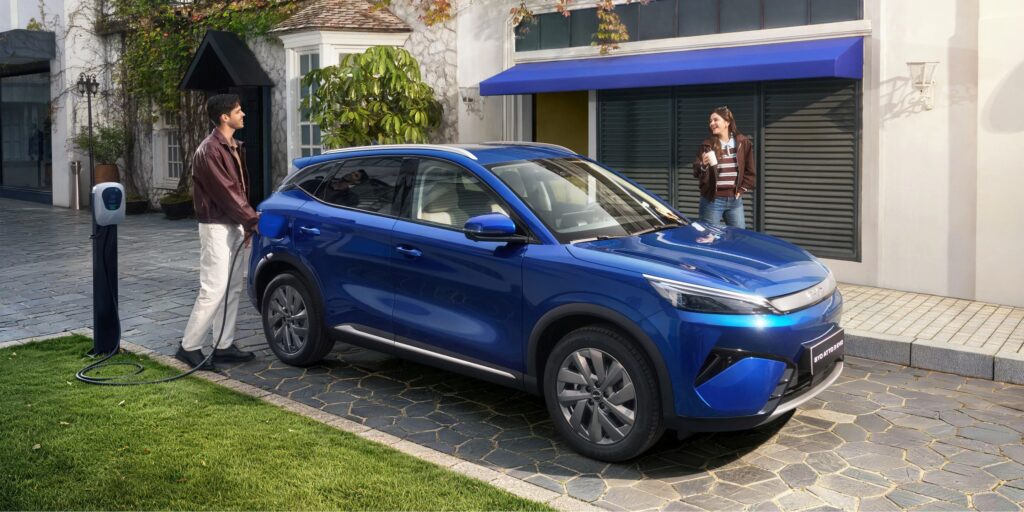
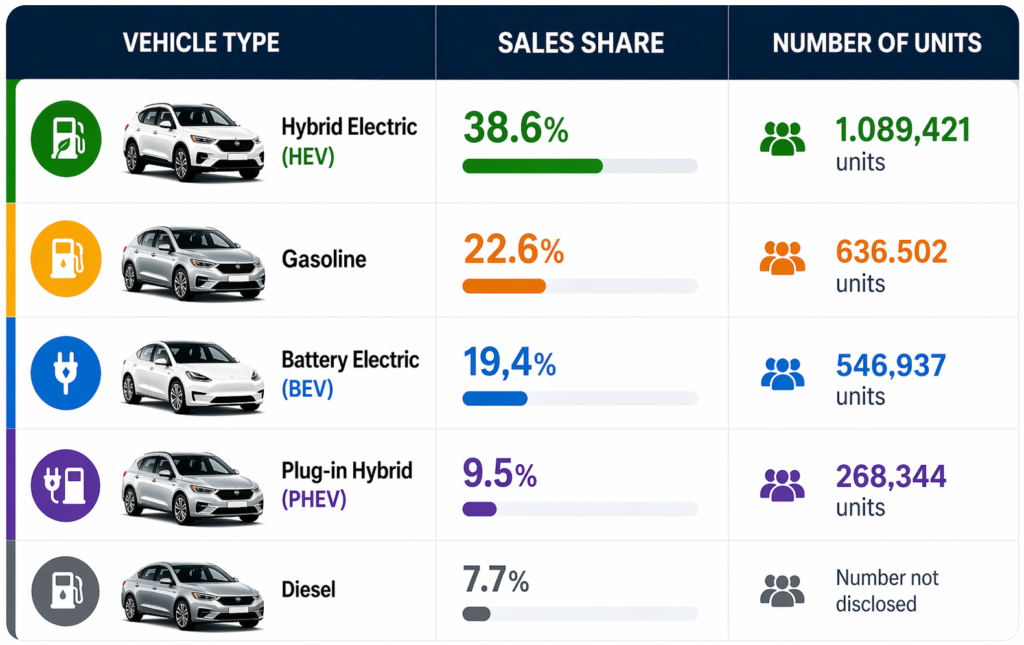
Hybrid electric vehicles (HEVs) lead as the most popular choice among buyers, accounting for 38.6%, while battery electric vehicles (BEVs) reached 19.4% of new sales. Plug-in hybrid vehicles (PHEVs) represented 9.5%. Together, these categories made up 68% of the market.
Traditional Fuels with a Lower Share
New gasoline vehicle registrations stood at 22.6%, while diesel accounted for 7.7%. Other energy types represented 2.2%. Combined, these categories total 32.5%.
Why Are Hybrids and Battery Electric Vehicles Growing?
Several factors may explain this trend, including the wars in Ukraine and the Middle East, as well as broader geopolitical and economic instability.
Many consumers see hybrid vehicles as a way to save fuel and reduce dependence on traditional energy systems.
Another important factor is maintenance, as battery electric vehicles have fewer moving parts, resulting in lower complexity and reduced maintenance costs.
With the growing adoption of home solar panels and battery storage systems, many consumers are gaining greater energy independence. In addition, many European countries offer tax incentives that can significantly reduce the price of new vehicles. In Portugal, for example, incentives can reach up to €4,000.
Sales Figures
Caution and Skepticism
Despite the apparent optimism, this scenario should be analyzed with caution: non-plug-in hybrid vehicles still rely on gasoline to operate. This shows that while consumers are increasingly skeptical of traditional fuels, they remain pragmatic and tend to prefer a gradual and safer transition. Another point of caution is range, which is almost always higher in internal combustion vehicles.
The Future
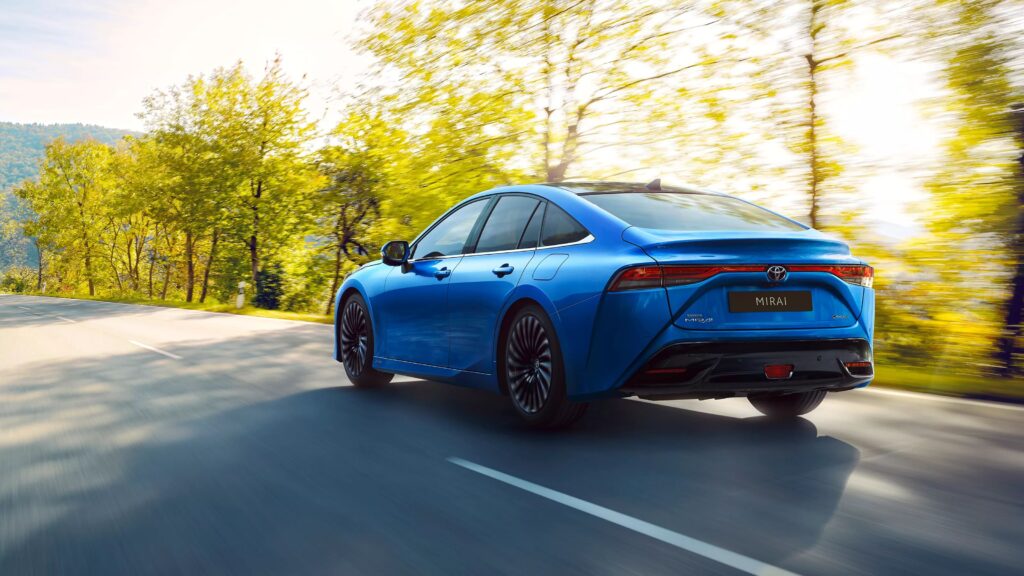
It is difficult to say whether gasoline and diesel will disappear. The future may not consist solely of electric vehicles, but rather a mix of new energy sources. As international examples, Toyota has been strongly investing in hydrogen: in 2014, the Japanese company launched the Toyota Mirai, a car powered by this technology. Brazil, on the other hand, is a pioneer in biofuels, with sugarcane ethanol being widely adopted in the country. For now, the trend is clear: consumers are increasingly seeking new technologies.